Steady Pace or Flying Leaps?
The Path from Apprentice to Journeyman Writer

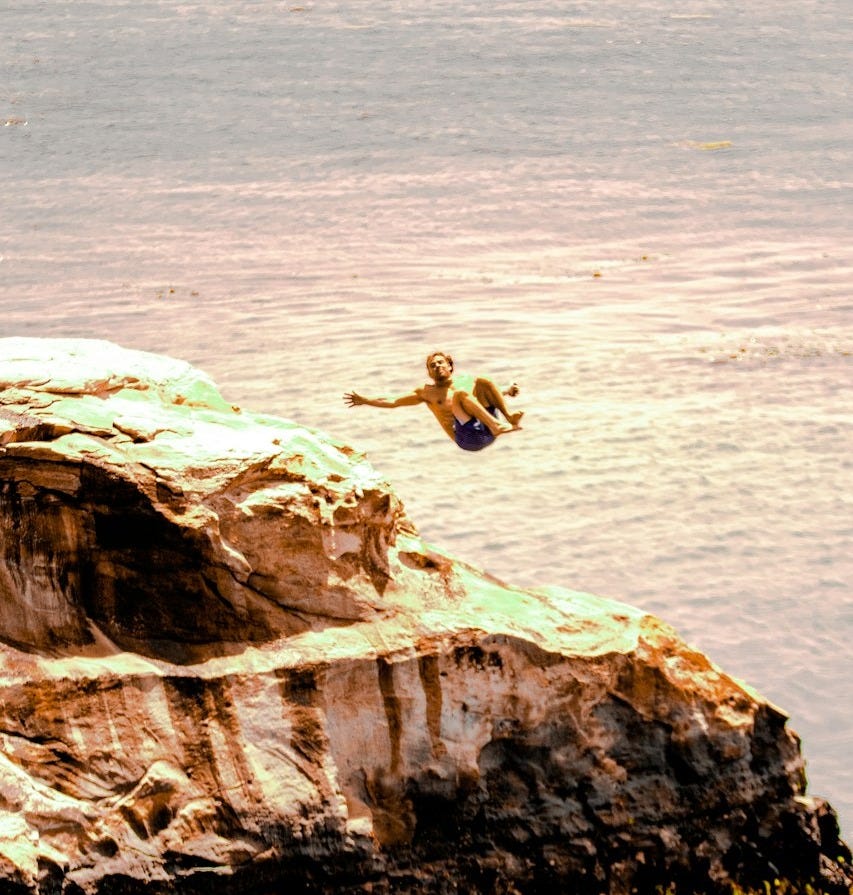
When you consider your life, have you lived it at a steady pace (like a camel in the desert, say), or has it been a series of leaps (like a frog in a pond)? Maybe both (you’re a camel who leaps on occasion)?
For a long time in my notebook, the idea for my novel Milksop was simply “summer on the farm story.” I gave it the working title Leap as I got deep into drafting it. At one point, I toyed with the more playful title Evan Mulder Takes a Flying Leap. When my novel is published next spring by Chicken House Press, I hope you’ll read it and see why I considered Leap but settled on Milksop.
Milksop is Evan’s coming-of-age story—the tale of what happens to him the summer he turns 18. The story is my coming-of-age as a novelist—I’ll be 65 when it comes out. Arriving at this coordinate on the map of my life has involved one long apprenticeship, a steady-paced journey, but also some big leaps. I’d like to share a bit about that process of becoming a journeyman writer—something I promised to do in my welcome post.
I’m hoping my experience will resonate with yours when it comes to steady pacing versus taking leaps in life. If not, you can just tell me to go take a flying leap—off a cliff Wile E. Coyote style.
The End of Apprenticeship: Becoming a Journeyman
I apologize if the word “apprenticeship” raises a phantom in your mind of Donald Trump’s The Apprentice, one that causes you to experience some acid reflux. I’ve never watched the show but know about it second hand, particularly his signature phrase “You’re fired!” Sadly, he’s now implementing that life philosophy on a global scale.
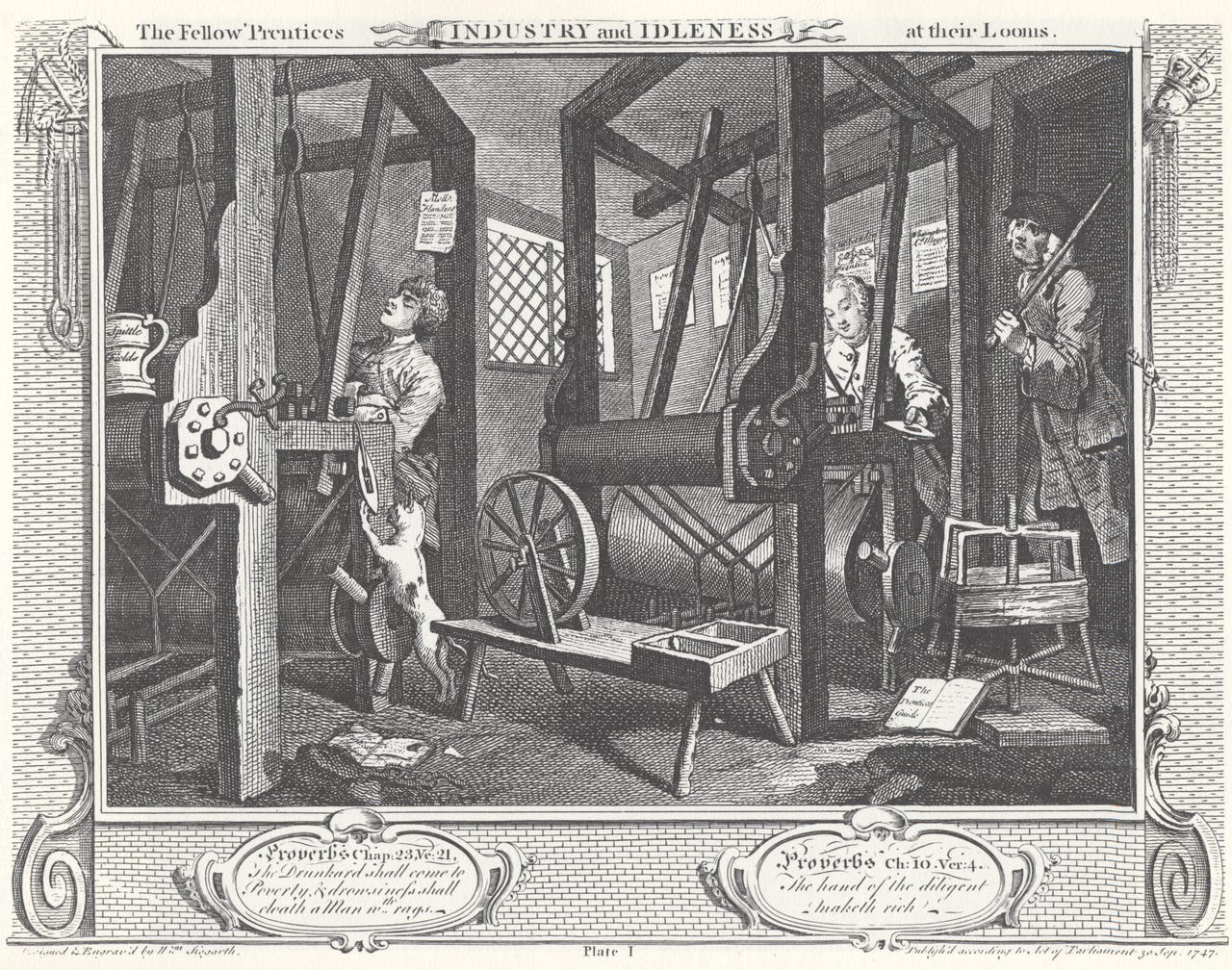
No, true apprenticeship involves humbling yourself to a skill and learning it slowly and steadily from a master so that you too can one day master that craft. The stage between apprentice and master is journeyman. Here’s how Jeff Goins describes it in Real Artists Don’t Starve:
During the Renaissance, traditional apprenticeships lasted about a decade. By the time an apprentice was done studying under the master, seven years had passed. During the following three years an apprentice became a journeyman and struck out on his own to prove his worth to the world. (p. 44)
In the strictest sense, my apprenticeship to the craft of fiction began in 2016, meaning I reached journeyman status when I first drafted Milksop in 2023, after seven years of writing short stories. During that time, I learned the craft of fiction by submitting myself to the guidance of several mentors (identified below). But to be honest, my writing apprenticeship began decades earlier—not quite as far back as the Renaissance, but far enough.
The Road to Journeyman: A Bit Long, a Bit Winding, Occasionally Risky
When I was still teaching, many of my creative-writing students shared with me that their love of writing stories began when they were young—often already in grade school. That wasn’t me. I have no notebooks filled with juvenilia I might one day sell if I become famous (or infamous, which might be better). I can certainly talk about my love of reading from a young age, but it took a long time for writing stories to appear as a real possibility on my horizon. Here’s what led to that point and beyond:
1977: A Leap into Storytelling. For an assignment in Grade 11 English, I wrote a story about a solitary man surviving a nuclear apocalypse in New York City. (It didn’t occur to me to set it somewhere in Canada. Big shit always happened south of the border.) What figured big in the action was a minute description of my main character eating insects. All of it was clearly an expression of my Cold War anxieties. My teacher and first mentor, Mr. McKeone, read the story aloud to my classmates. I still recall my mortification, how red I turned, how hot and flushed I felt. The good news was that it showed me I could actually write a story that at least one person found worth reading, even if it was only because he was paid to; the better news is that my embarrassment prevented me from writing another story for about 30 years.
1980 Onward: A Steady Pace Toward Becoming an Ideal Reader. After high school, I dedicated myself to the study of great stories, poems, and plays from across the centuries—earning three degrees along the way that landed me in a 35-year career teaching great literature, Canadian literature in particular. The result? First, I came to understood what made for a great story. Second, I thought, “I can never write a story that great!” Third, I absorbed much of the Canadian cultural tradition out of which I would eventually start writing.
Sometime around 1988: A Leap into Business. While working on my PhD at Dalhousie University, I landed one of my first teaching jobs through St. Mary’s University. It involved going into the offices of Maritime Tel & Tel to teach business communications. My qualifications? I knew English, and my dad was a businessman. But what I learned there served me well when I started writing creatively: I learned that it’s all about the reader. (I ended up teaching Business and Technical Writing for about 15 years, which confirmed my belief that in the end all writing needs to serve readers.)
1990 Plus: Periodical Humour. When I was hired for my first full-time position at Dordt College, I was low professor on the English Department totem pole. That meant I was responsible for writing up the minutes of our meetings. Meeting minutes are notoriously dull to write and to read, so I started spicing them up with quirky comments and humorous observations. When these minutes were distributed among all the faculty and administration, I discovered that my colleagues actually read and enjoyed them, though the administration was less amused. Mind you, my minutes led to one of the highlights of my career: the opportunity to roast our president, Dr. J.B. Hulst, on his retirement. Taking risks with humour also led me to write and perform a short skit for an evening of entertainment at the end of a week-long teaching seminar I attended in Toledo, Ohio: I lovingly parodied one of our quirky instructors, and he loved it. I discovered that getting people to laugh is addictive.
1993: Leaping into Poetry Writing. I’d been teaching students to understand and appreciate poetry for a number of years when it occurred to me that I’d never written a poem myself. To understand poetry from the inside, I audited a poetry-writing class taught by my colleague Mike Vandenbosch. Sitting among my own undergraduate students and sharing my efforts with them and mentor Mike was my first workshop experience: I loved both the risk and the reward.
2000: Leaping onto a Farm. Few things have influenced the content of my writing more than moving to the country. I blame my daughter Beth, whose love of animals from infancy forced us to flee urban life. (At least it paid off when she became a vet.)
2014: A Leap into Teaching Creative Writing. In the early 2010s, I proposed to my English colleagues at Redeemer University in Hamilton, Ontario, that we add to our program a writing stream to complement our literature stream. At that point we had just two upper-level creative-writing courses, but there was keen student interest in more. An important new course would be an introduction to creative writing. My foray into poetry writing hadn’t turned me into a practicing poet: by then, it had been some years since I’d written a poem, let alone published one, but I screwed my courage to the sticking place, and said, “I’d like to teach that course.” I don’t think to this day that my colleagues know how nervous I was to put myself forward for the course. Foolishly, they agreed to let me. This could have been a situation of “Those who do, can. Those who can’t, teach.” Fortunately, it didn’t ended that way.
Fall 2016: A Late Leap into Writing Fiction. In the fall of 2016, I said to my wife, “I’d really like to try fiction.” I’d shared this wishful thinking for a number of years, but I was now 55 and felt time’s wingèd chariot drawing near to rudely run me over. Possibly sick of hearing this lament once again, April said, “Why don’t you write me a story for Christmas?” Cheapskate that I am, I wrote “The Jelly Cupboard,” inspired by the time she signed me up for a woodworking course. I then took another leap and asked Hugh Cook to read it for me. A professor emeritus at Redeemer and a graduate of the Iowa Writers’ Workshop, Hugh is the author of two novels and two collections of short stories: I knew I’d get some honest feedback from him. He agreed, and essentially has been my mentor ever since, reading every story I’ve written, as well as a draft of Milksop.
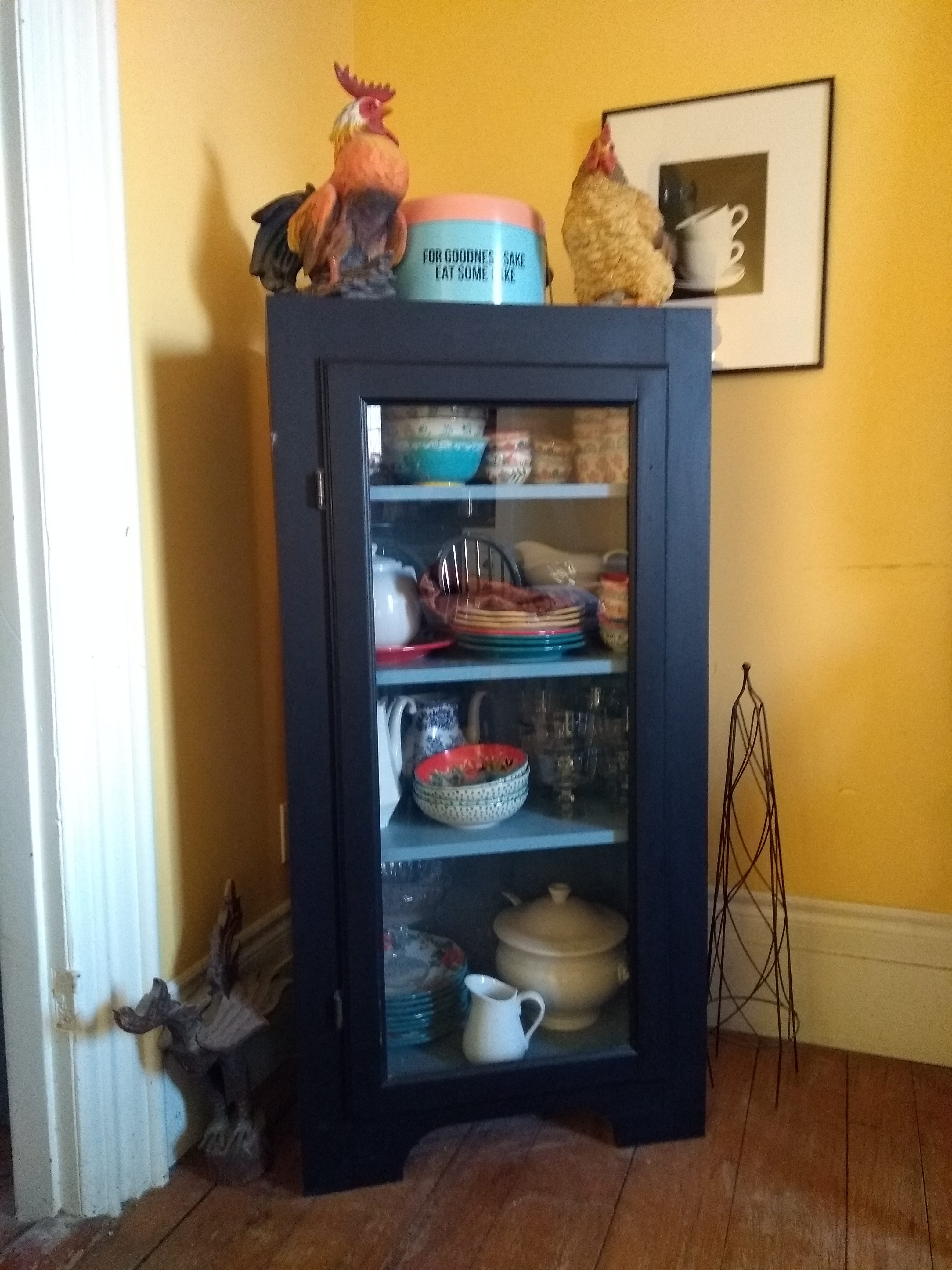
2017 Onward: Writing Short Stories at a Steady Pace. With that first story, I swerved away from traditional literary scholarship and dedicated myself to writing short stories. I often said to my students, “There’s the writing you do—the challenge and joy of it. And then there’s the difficult business of publishing, which you can’t control.” During this time, I learned a lot about rejection. I mean a LOT. But also about my capacity for stubborn persistence, driven by a compulsion to share stories. The result? A small number of stories published in magazines, then eventually my first collection, Moonshine Promises. (Tidbit: The last story I wrote for the collection is the first one in it, “Under the Honey Moon.” Why? It addressed highly personal material. It was a leap I needed to take.)
2022-2023: A Sabbatical Leap. Early in my 60s by then, I dedicated an entire year to writing, promising myself I would be bold and take risks. I successfully applied for a Canada Council for the Arts grant to support my projects and was tickled when at my age the CCA designated me a “New and Emerging Artist.” With the funds, I attended the Wild Writers Festival in Waterloo and got as wild as I ever get. More than that, I spent a week at the Humber School for Writers Summer Workshop in a group led by Michael Antonio Downing, then through the fall and winter I worked on my second collection of stories (The Healing Arts) under the mentorship of Joseph Kertes in Humber’s Graduate Certificate in Creative Writing. Finally, in the spring I took the leap into novel writing by joining The Novelry and drafting Milksop. Through this fertile period, Hugh Cook continued to read my work, but I now put myself and my work out there even further with more mentoring, as well as working with coaches and editors at The Novelry.
July 1, 2025: A Leap into Retirement. My sabbatical year showed me what my writing life might look like. Two years later, I did a “hard” retirement, a year shy of turning 65. By then, I’d been in school for almost 60 years. I told my colleagues that I wouldn’t be coming back to teach a course here and there, which is a common practice for professors, many of whom actually die “in the harness,” as the saying goes. Instead, I said, “My life first as a student and then a professor feels like a well-worn, now shabby, even ratty suit of clothes: It’s time for me to get naked, check out what’s underneath, and maybe don some new threads.” My colleagues and the administration at Redeemer had been very supportive of my swerve out of the lane of traditional scholarship into the bumpy off-road trail of creative writing, but I felt the need to step away. For that reason and because I disagreed with the administration on a matter of principle, I decided not to apply for emeritus status. I’ve largely vanished from academic life—a retired professor, an unretired writer.
Heart Leaps
One of the poems that inspired me as I was writing Milksop was William Wordsworth’s “My Heart Leaps Up.” That’s what I feel when the writing is going well. And my simple hope as a writer is that a reader’s heart will leap up in reply. If you read Milksop, that’s the experience I wish for you.
As a writer, I’m curious to hear what leaps you’ve taken in your life, whether of the heart or some other organ, and what the results have been. Has the leap been rewarded? Or has it ended in disaster? As always, if the spirit moves you, please share.