Stephen King Loves “Milksop”!

Apparently, Stephen King loves “milksop”—that is, the word “milksop,” not my debut novel of the same name. Perhaps “love” is too strong. “Likes,” then. Okay, “used ‘milksop’ in a novel” is the more accurate phrase. But the coincidence is serendipitous for me, isn’t it?
Who’s a Milksop?!
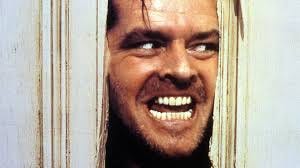
Over the holidays, my publisher (Alanna Rusnak of Chicken House Press) decided to do some uplifting reading, as one does when in the Christmas spirit. Did she read A Christmas Carol? No. She re-read The Shining. In chapter 46, she came across this passage:
“All you ever think about is ways to drag me down. You’re just like my mother, you milksop bitch!”
Ouch! A double milksop whammy against mothers and wives, yoking “milksop” with the “b” word no less! At this point in the story, Jack Torrance is far along in his unravelling, losing his mind to the haunted and haunting hotel, and he lashes out at his wife Wendy with these words.
The lesson? Only someone who’s gone mad would call someone they supposedly love a milksop. (In my novel, that’s Evan’s name-calling brother Jeff.)
Milksop Not Horror-ble?
Stephen hasn’t read my novel—at least, not yet. If he did, I hope he would find it “not horror-ble.” Horror isn’t the genre I’m working in. No, Milksop is dramedy (drama + comedy – something I’ll explore in a different post).
Mind you, I’d love to get an endorsement from Stephen King! Who wouldn’t? In the publishing business, the highly technical name for an endorsement from another author is “blurb.” If you hear writers saying they’re busy blurbing, that’s what they’re up to: reading a fellow author’s forthcoming book to craft a pithy bit of praise for editors to put on the back cover and marketers to blast across social media. “Blurbing” is not to be confused with “blubbering,” which is what writers do when reading reviews of their book—or, even worse, hearing that deafening silence created by a lack of reviews.
So, Stephen, if you’re listening, how about reading Milksop and supplying a blurb? Something like this will do, if you don’t have time to craft it yourself:
“John Van Rys’s debut novel is scary good, so good it will haunt you for a long time—at least five minutes after you read the closing sentence, if you get that far.”
A Grade-School Horror Story
To be honest, I’m not a big fan of horror stories. It seems to me there’s enough horror in real life, especially right now. If I want a horror story, all I need to do is look south across Lake Erie to the Divided States of America. If I gaze far enough, I’m sure I’ll see a house of horrors, the White House of Horrors, that is, filled with all manner of ghouls. At one end of this madhouse, a gaudy, ghastly appendage is currently rising on a foundation of filthy lucre. That, and the doors and windows have all been thrown open to send forth an army of faceless hollow men to terrorize the land.
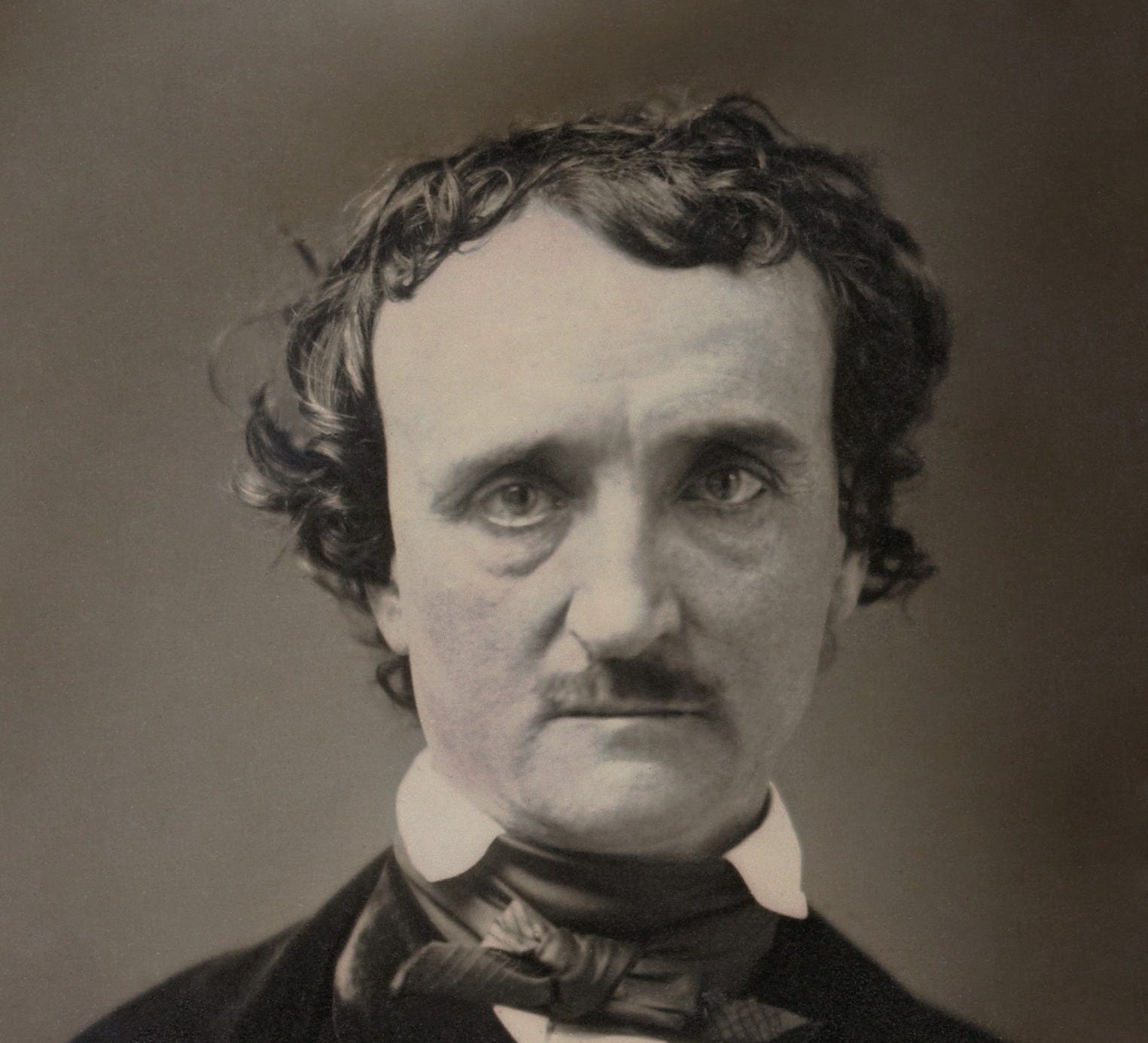
I trace my reluctance to read horror stories to an encounter with Edgar Allan Poe around 1970 at Nicholas Wilson Public School in London, Ontario, Canada. Nicholas Wilson was structured around the quad system: classrooms separated by walls that could be folded back. My grade 3 teacher, Mr. McLeod, had the great idea of reading Poe’s “The Tell-Tale Heart” to our entire quad. (Could a grade 3 teacher do that today, or would there be an unholy hullabaloo about it?)
Quite foolishly, he made me his assistant. As I remember it, during recess he used a tape recorder and microphone in a tin can to capture the beating of my heart, gradually increasing the volume. (If you know Poe’s story, you know why.) He cued up the recording and told me at what point in the tale to start the tape. The students all filed in from outside and sat on the floor. Mr. McLeod dimmed the lights and began.
“True!—nervous—very, very dreadfully nervous I had been and am; but why will you say that I am mad?”
At the appointed moment, I flipped the switch on the machine—the wrong way. The tape unwound completely. I still see the spool spinning wildly. Another teacher came to my rescue and got the tape rewound and my beating heart started. But the timing was now off, the dramatic effect ruined. I had one simple task, and I blew it.
To this event I trace not only my reluctance to read horror stories but my lifelong technophobia and fear of the performing arts.
The irony, of course, is that I went on to teach Poe’s stories and poems to university students for decades.
Fear and King’s On Writing
I love reading books on writers’ lives and the craft of fiction. It’s been an important part of my apprenticeship. For its bluntness and wisdom, one of my favourites has been Stephen King’s On Writing. (Being of Dutch descent, I laughed when I read this statement about his struggle with substance abuse: “Alcoholics build defenses like the Dutch build dikes.” Not that substance abuse itself is funny. See how tricky horrible things can be?)
Interestingly, King argues that fear is the writer’s enemy.
“I’m convinced,” he says, “that fear is the root of most bad writing.”
By contrast, “Good writing is often about letting go of fear and affectation.”
And further, “Writing is at its best—always, always, always—when it is a kind of inspired play for the writer.”
Letting go of fear and affectation, striving for inspired play: As a writer, that works for me, and it sounds like helpful advice not just for writing but for all of life—now more than ever.
As always, if the spirit moves you, please share your thoughts with me and this post with others. It’s all free, all the time.
Ah, the pleasure of looking up rare words in the dictionary. One of my favourite words that trip people up is whinge or whinging. Similar in meaning as whine, but, apparently pronounced differently.