Something Ventured
Nothing Gained?

You’ve likely heard about “the word of the year”—the practice of dictionaries choosing the word or phrase that characterized life on this blue-green ball during a particular circuit of the sun. For 2025, the Oxford Dictionary chose “rage bait,” while Merriam-Webster chose “slop,” that is, “digital content of low quality . . . produced usually in quantity by means of artificial intelligence.” Enough said about the sad state of the Internet—and civilization.
But have you heard of a “word of intention”? I hadn’t until the beginning of this year, when a writing coach at The Novelry, Melanie Conklin, posted about the practice of choosing a “theme” word for the year—one that would guide your thinking and behaviour, particularly as a writer, during the coming months. Melanie chose “love.” Is there any better word?
Then a few days later, Gill Deacon posted “New Year, new word, new attitude” at her Substack, A Love Affair with the Unknown. Her word of intention for 2026 is “protean.” Again, a great choice with many possibilities for living and writing during a time of great uncertainty.
What word of intention did I choose? “Love” and “protean” being taken, I perhaps quite foolishly chose “venture,” and now for all of 2026 I’m stuck with it.

Venturing: What Had I Signed Up For?
Why “venture”? Because in life and writing I tend to be risk averse, and that can be quite limiting. Venturing involves undertaking daring actions that offer but do not guarantee a reward, a return on the investment of time, energy, or money. Of course, marriage is such a venture, as is having children, writing a novel, or wrestling an alligator. “Putting yourself out there” in any of these ways might lead to your body marinating beneath a log in a swamp if things don’t go well with family members, critics, or critters.
Venturing is one step away from adventuring, the words and concepts are that closely related. The prefix “ad” adds motion and direction to venturing, intensifying it. Challenges, dangers, and opportunities come at you as you go out to meet them.
The times we’re living in seem to call for such (ad)venturing, given that forces of darkness are pressing us to hide in a closet and curl up in a ball. Everywhere, brave people are venturing out to kick at the darkness, fracturing it to let some light in. Could I muster even a small amount of courage to join them?
Not that I haven’t already been venturing in recent months, or even recent years. As I wrote in an earlier post, “Steady Pace or Flying Leaps? The Path from Apprentice to Journeyman Writer,” my journey as a fiction writer has included several leaps, beginning with the decision in 2016 at the age of 55 to attempt a short story. Fast forward to July 1, 2025: after publishing a collection of linked stories, Moonshine Promises, and drafting a novel, Milksop, I retired. Retirement as venturing? Yes, in the sense that after 35 years, I dropped the word “Professor” ahead of my name, aiming to find out who I was without the title “Dr.” while also dedicating myself more fully to my writing and risking the attempt to get it out into the world.
Two Months In: Venturing Progress Report
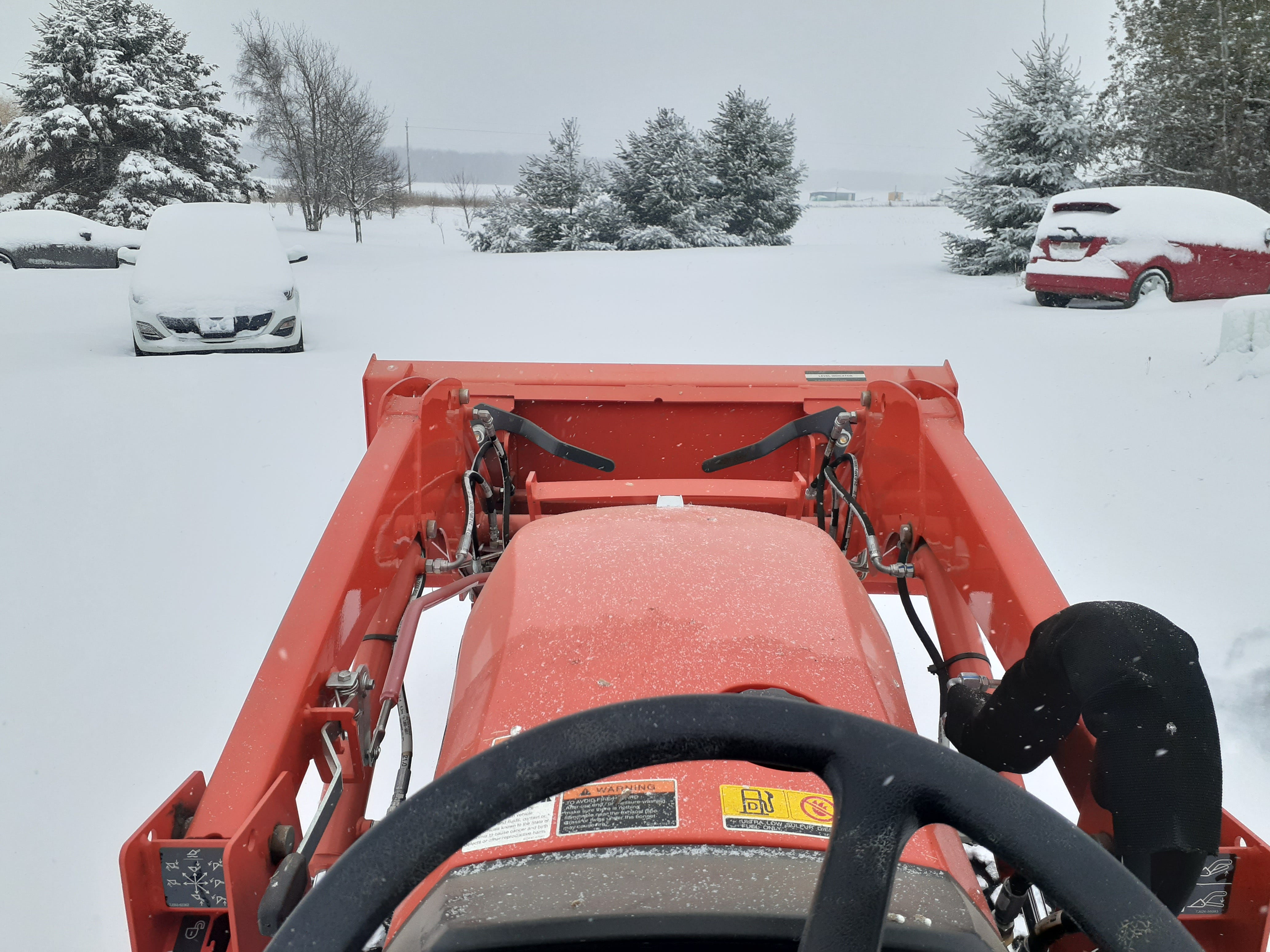
This, then, is my first full year of being a retired professor but unretired writer, and I’m two months into my year of intentional venturing. How’s it going? I’m tempted to call this a regress report instead. I’m wondering if the word-of-intention practice is just like New Year’s resolutions—typically abandoned after four to eight weeks. At least physically, I haven’t done much venturing, hampered by a torn meniscus in my right knee and tons of snow. The extent of my venturing has largely been on my tractor to clear dumps and drifts from my 450-foot laneway. (Regrettably, I never got around to putting up my snow fence. I was lulled into complacency by several mild winters.)
That said, I have been putting myself out there when it comes to the upcoming publication of Milksop. I’ve reached out to writers I know, asking them to read it and offer a “blurb.” I’ve contacted book reviewers to see if they’d consider reading my book and publishing their judgement of it. I’ve posted about various publishing milestones, trying to have fun with the process rather than giving in to feelings of being pushy and self-conscious. And I did my first public reading of Milksop, testing how reading the opening aloud would be received.
The most significant act of venturing I’ve undertaken this year, though, is sharing a draft of my second novel, Awkward Turtles, with my long-time mentor and first reader. Such feedback means taking the risk of getting some tough love, and that’s what he gave my manuscript, whether pointing out weak stylistic habits, humour that doesn’t work, or places where the story flags. Perhaps most importantly, he asked me to reconsider the frankness of the story. In my short stories, Evan Mulder is something of a bumbling husband and father, a man of the muddled middle. In Milksop, his coming-of-age story, it’s about his fears, as the title suggests. By contrast, Awkward Turtles, essentially a friend reunion story, plumbs Evan’s jealousies and desires, his capacity for misanthropy and betrayal. My mentor asked, How might your current readers react?
In a writing workshop I attended last year, Meg Rosoff encouraged us budding novelists to risk failure, to risk writing something we might even be ashamed of in the future. With Awkward Turtles, that’s the venture I’m debating right now. I want to grow and stretch as a writer, but how far do I push the story when I care both about whatever truth it’s trying to get at and about readers and their experience? Where will I land? Stay tuned.
Venturing Forth
Meanwhile, I have plenty of other venturing to keep me busy: the launch of Milksop, the repatriation of Moonshine Promises, and the potential publication of a second collection of Evan-and-Mae stories, The Healing Arts.
While the revision of Awkward Turtles is preoccupying my creative energy, I’m also venturing forth in search of my next story—paying attention to worlds outside and inside, listening, reading, observing, remembering, reaching out, scribbling notes. What will this new story be? How will it come at me as a new writing challenge?
There is this image that came to me in dream. A farmer on a tractor is tilling his field and comes across a man’s body face down in a furrow. He’s naked (the man, not the farmer, though if the farmer were naked, it would add some comic potential to the story). How did the body, with its oh-so-vulnerably-exposed buttocks, get there? I’ve never written a murder mystery and really don’t know how. But anything is possible at this point.
I’ve come to believe that every act of imagination is a form of venturing. It’s an internal verbal adventure you hope will one day find its way into the wider world where readers, too, will experience it as an adventure in their interior landscape. Your greatest, most foolish hope is that it will add something valuable to the adventure of their own lives and the well-being of the world. A heartbreaking ambition, really.
I recently read Margaret Atwood’s Book of Lives: A Memoir of Sorts, and was struck by this passage in the final chapter:
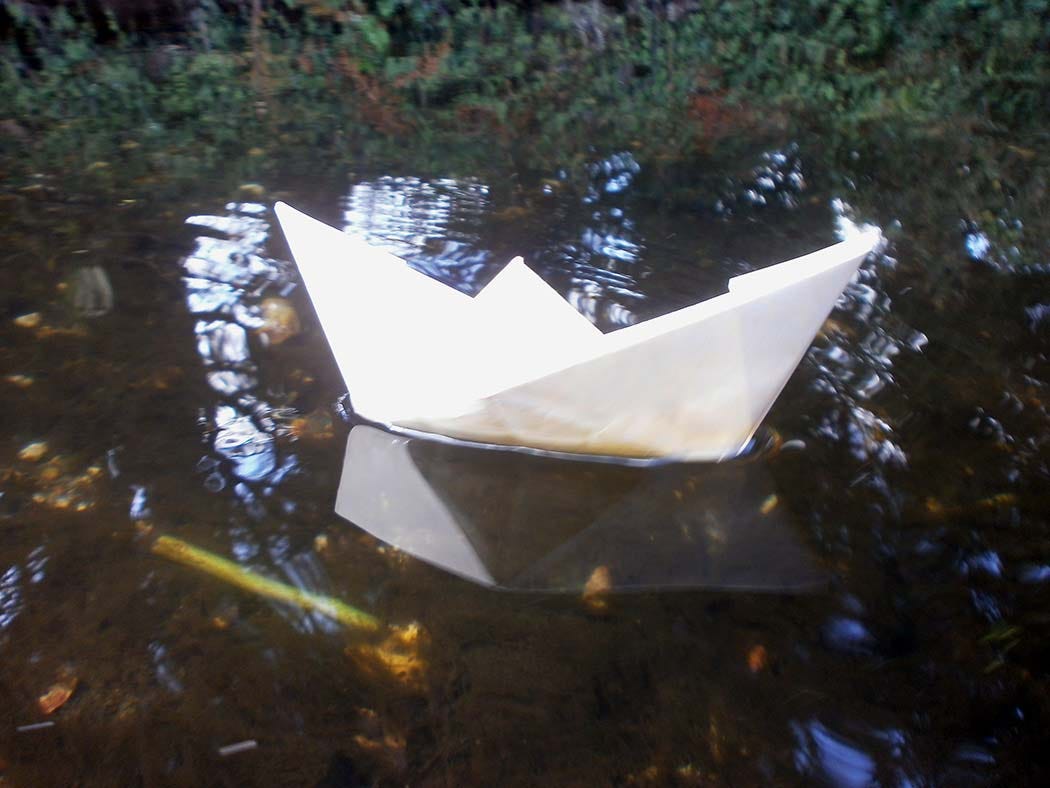
“Art is long, life is fleeting, the shadows lengthen: it’s hard to shake the feeling that I’m living in the half-light of a partial eclipse. But as you can see, I continue on with the writing, that activity I began back in 1956 when I was sixteen and the world was a far different place. On we sail in our paper boats, we writers. Flimsy enough vehicles, but we don’t jump ship. Or at least I haven’t. Or not yet.”
The “as you can see” refers to her 2024 publication Paper Boat: New and Selected Poems, 1961-2023. Paper boats: such a rich metaphor for how writers travel through life and what they produce. I’ve felt it. I’m feeling it as I cast Milksop, my fragile paper boat, upon the ocean. Will it float? If it does, where might it land? I’m feeling it as I try to wrestle my second novel into something that might ride the waves. I’m feeling it as I cast about for another piece of paper to fold.
I’m reminded, too, of the parable of the talents. (If you’re not familiar with it, check out Matthew 25: 14-30.) As with many of Jesus’ parables, it contains both a caution and an invitation. Talents, whether coins or gifts and abilities, are meant to be used for good, not buried. “Nothing ventured, nothing gained” is the saying, but now I prefer to think, “Something ventured, something given.” Exercising the gift of imagination, while satisfying in and of itself, is only complete when its products end up as gifts for readers.
Meanwhile, I need to explore venturing in other areas of my life. I’ve been checking the Elections Canada website with the idea I might become a polling officer. Contributing to a smoothly running election would be a small act in defense of our democracy, a kicking back at the billionaire-sponsored AI slop and rage bait out there.
A word of intention: there’s a lot of year left if you want to choose one. Either that, or feel free to borrow mine and do your own adventuring. Just be careful what you wish for.
As always, if the spirit moves you, please share your thoughts and this post.
Meaningful stuff, John. Thank you!